What is Dance/Movement Therapy?
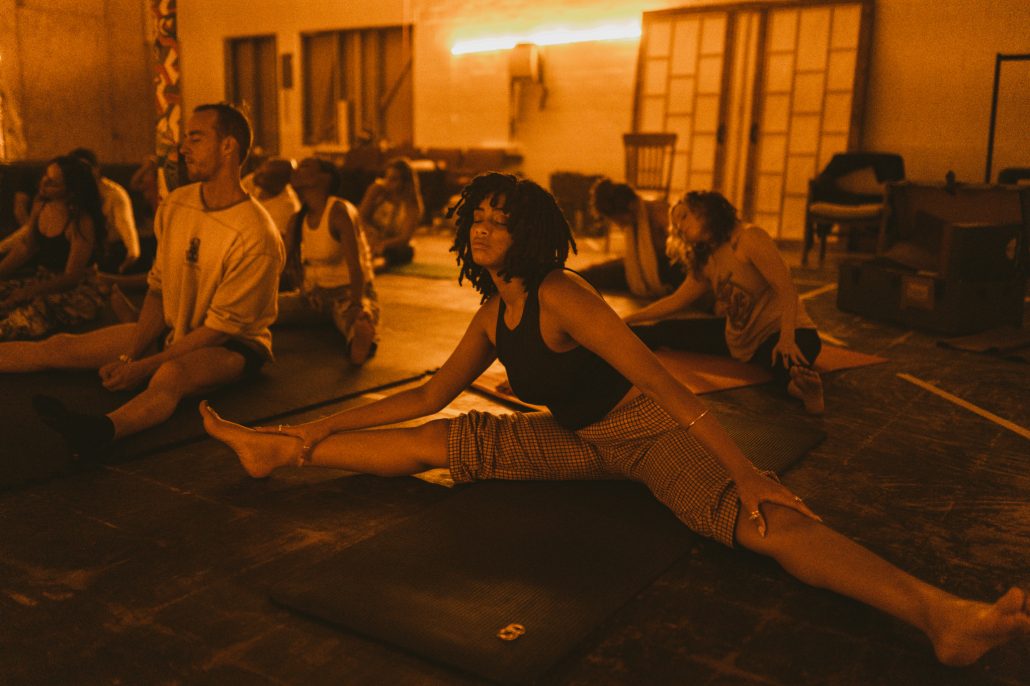
The American Dance Therapy Association defines dance/movement therapy (DMT) as the psychotherapeutic use of movement to promote the emotional, social, cognitive, and physical integration of the individual. In other words, it’s therapy that understands the body and mind as partners in healing, each informing and shaping the other.
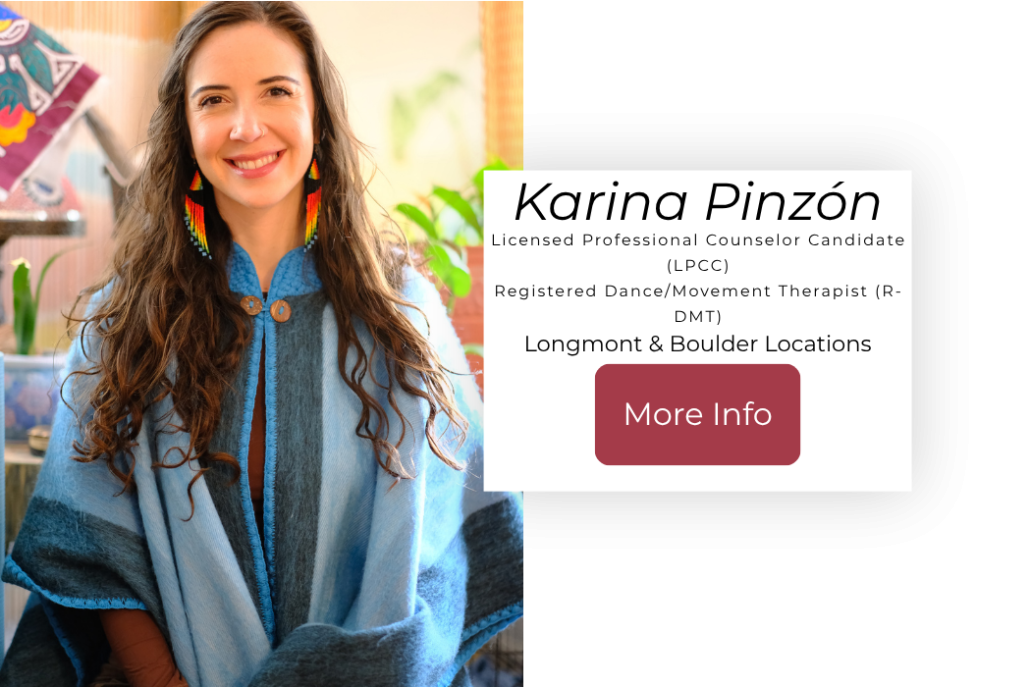
Humans have danced to grieve, celebrate, pray, and heal for as long as we’ve existed. Dance/movement therapy emerged as a formal clinical field in the mid-twentieth century, when dancers working in hospitals and communities began witnessing how movement could reach people in ways that words alone could not. Today, Registered Dance/Movement Therapists (R-DMT) hold graduate-level training in both counseling and movement, and are credentialed by the Dance/Movement Therapy Certification Board.
Like other somatic approaches, DMT works from the “bottom up,” meeting you through the nervous system, the senses, and the body’s own intelligence, rather than relying only on thinking and talking. Our bodies carry our histories: the ways we’ve learned to brace, shrink, protect, or hold ourselves together. They also carry our resilience, our creativity, and a deep capacity to return to aliveness. DMT gently makes room for both.
Do I have to be a dancer?
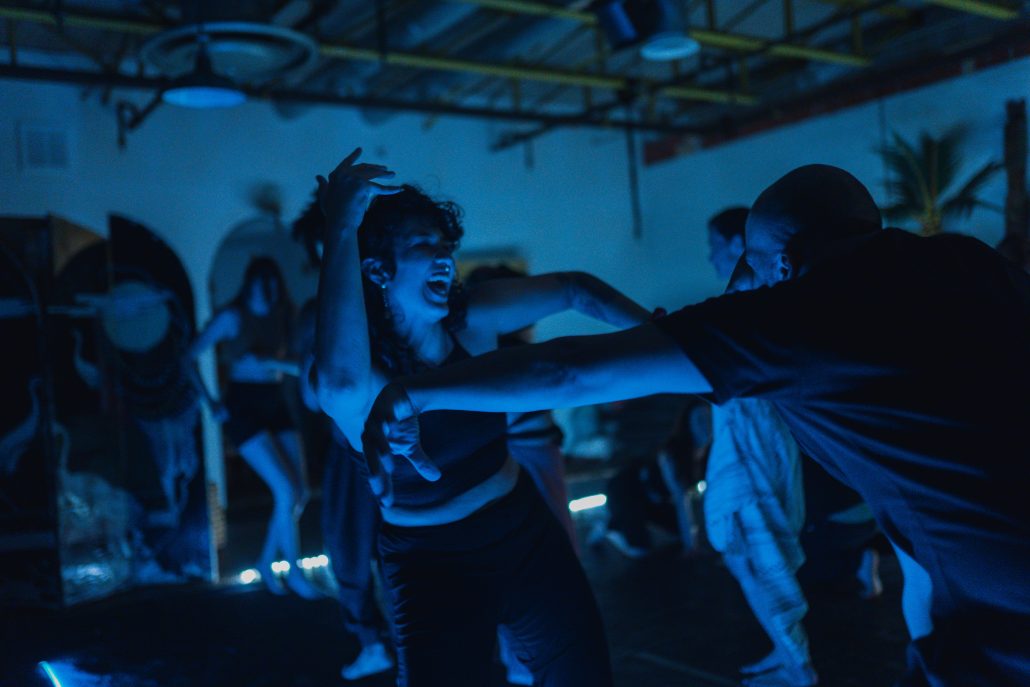
Not at all. If you have a body, you are already a dancer.
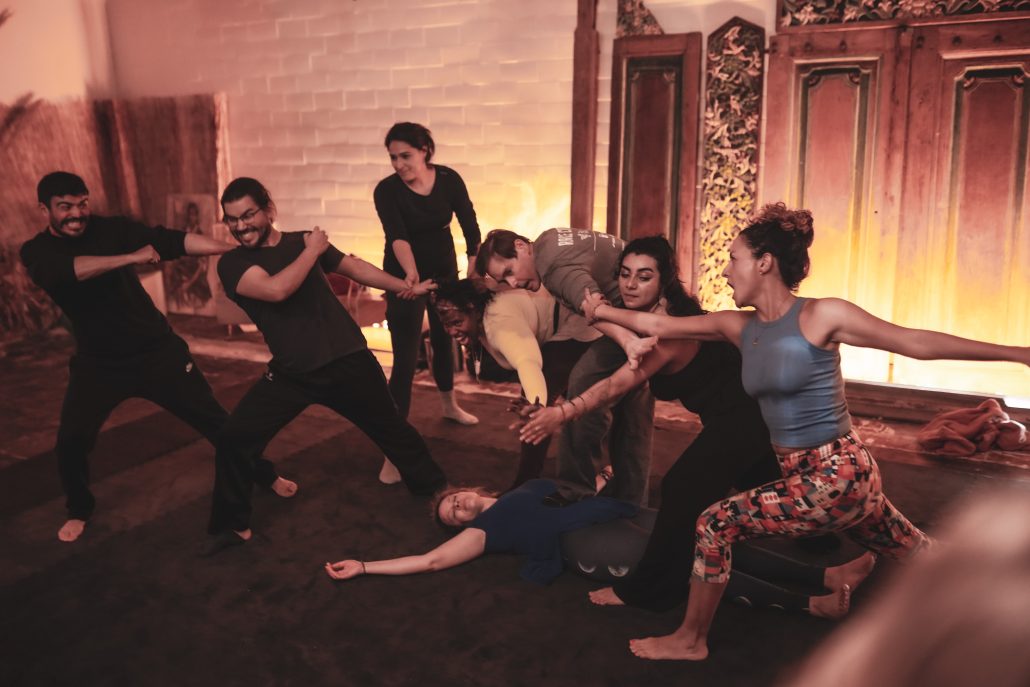
Dance/movement therapy isn’t about technique, performance, or how your movement looks. There’s no right way to move and nothing to get right. Movement might be as small as a breath, a shift of weight, or a hand slowly finding its shape. It can happen standing, seated, or lying down, and it always honors what your body can and wants to do on any given day.
For some people, dance has been a source of joy. For others, it’s been tangled up with judgment, pressure, or pain. Both histories are welcome here, and part of the work can be discovering a new relationship with movement that belongs to you.
What might a session feel like?
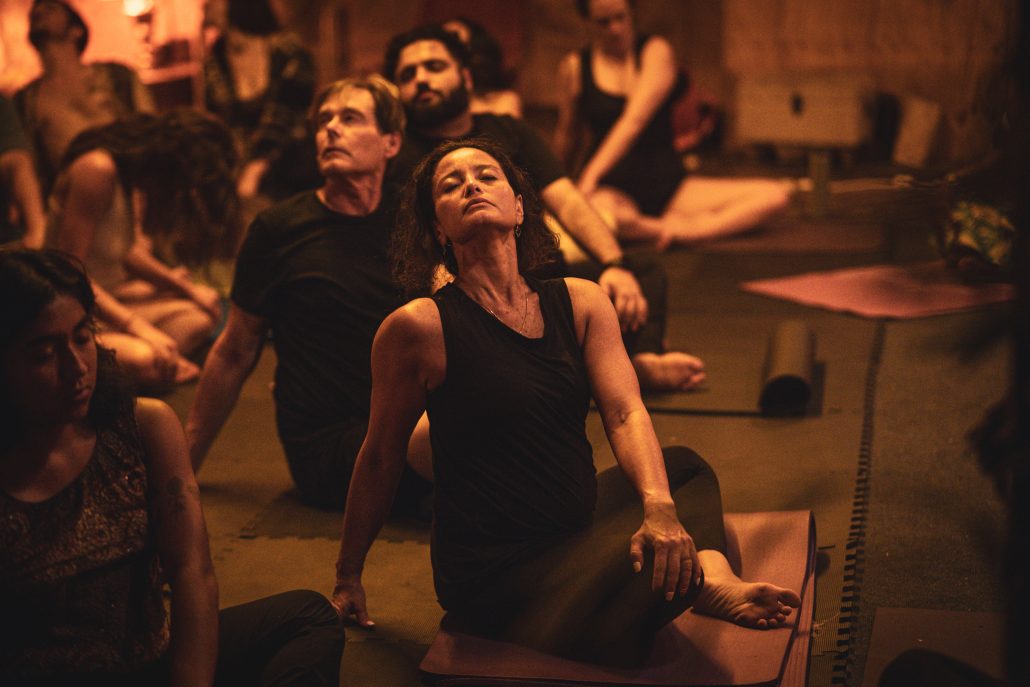
No two sessions look quite the same. Dance/movement therapy is client-directed, which means we follow what’s alive in you on that day. Some sessions may involve a lot of movement; others may look much like talk therapy, with the body gently invited into the conversation. Along the way, you might experience:
- Bringing the body into the conversation. As we talk, you might be invited to pause and notice what’s happening in your chest, belly, or throat, letting that felt sense deepen and guide what you’re exploring.
- Letting sensation become movement. A tightness might want to become a push, a curl, a spiral, or a reach. Following these impulses can reveal what words haven’t yet found.
- Embodied storytelling. Your story can be told through movement as well as voice, with body and language informing one another.
- Guided or free-form exploration. Some sessions offer more structure, such as a gentle warm-up or a guided movement practice that returns you to your own center and support. Others begin with quiet, open space to drop into the body and move however it wants to move.
Throughout, your therapist offers what DMT calls witnessing: steady, compassionate attention without judgment, so that your movement and your experience can be seen and reflected back. Sometimes the most important part of a session is the quiet after moving, when the body settles and words begin to arrive on their own. You’re always in charge of the pace, and nothing happens without your consent.
What can Dance/Movement Therapy help with?
Dance/movement therapy can support people of all ages, including children and teens who may find it easier to express themselves through movement than through words. It may be especially helpful if you’re navigating:
- Anxiety and stress
- Trauma and PTSD
- Depression, numbness, or feeling disconnected from yourself
- Body image and your relationship with your body
- Identity exploration and self-expression
- Relationship and attachment concerns
- Grief and life transitions
- Feeling that talk therapy alone hasn’t reached what you’re carrying
Rooted in culture and community
Long before it had a clinical name, movement was medicine. Across cultures, people have gathered in circles, in ceremony, and in celebration to move through what life asks of them. Dance/movement therapy honors these roots, and recognizes that how we move is shaped by our cultures, families, ancestries, and the systems we live within.
Sessions are offered in English, Spanish, and Spanglish. Sometimes the body’s truest words live in the language it first learned to feel in, and you’re welcome to move between languages as freely as you move between gestures.
“We do not need freedom from the body; we need the freedom to become body.” — Jill Hayes, Soul and Spirit in Dance Movement Psychotherapy
Ready to begin?
Your body has been carrying you all this time. If you’re curious about what it might be like to listen to it more closely, we’d love to hear from you. Reach out to schedule a free consultation and explore whether dance/movement therapy feels right for you.